
SASHA
SLEPCHUK
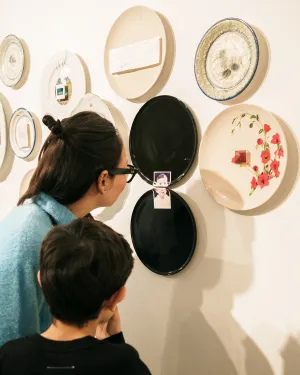
Plates from Abandoned Homes — installation, 2025
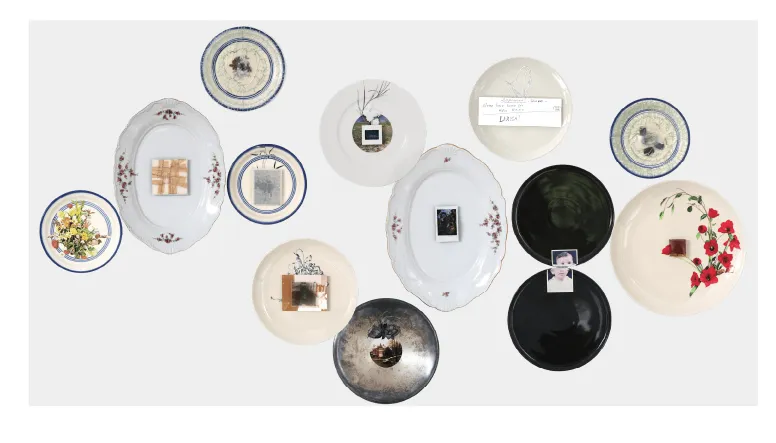
Found ceramic and metal plates, photographic materials (prints, polaroids, negatives, 35mm slides), tracing paper, printed cut-outs, glass, foil, copper, paper.
170 × 90 cm
All the plates were found in abandoned houses in Limassol, and the photographs on the streets. Rejected, crumpled snapshots; notes forgotten inside discarded books; unwanted, blurred frames - these are exactly the ones that were chosen.
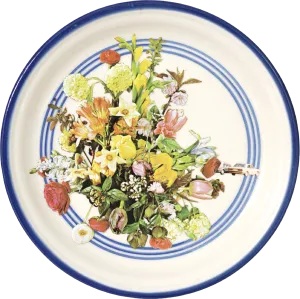
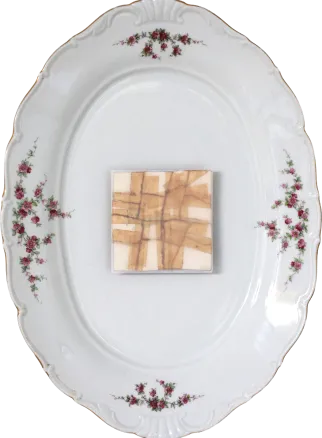
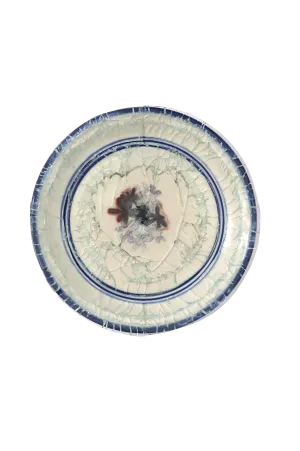
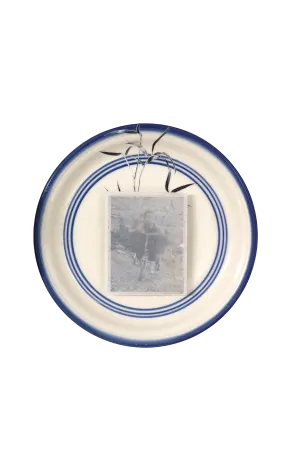
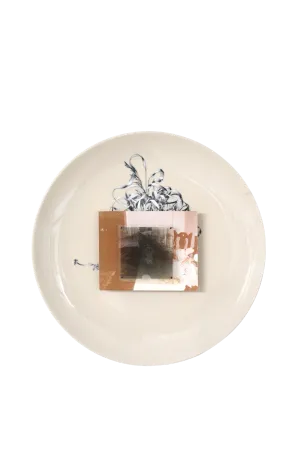
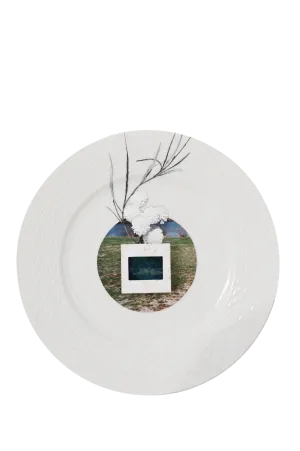
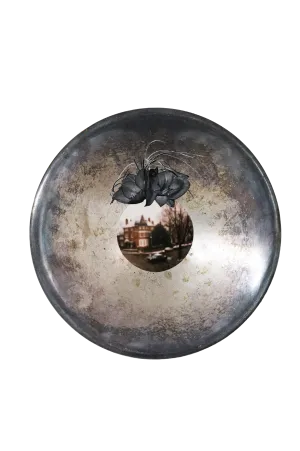
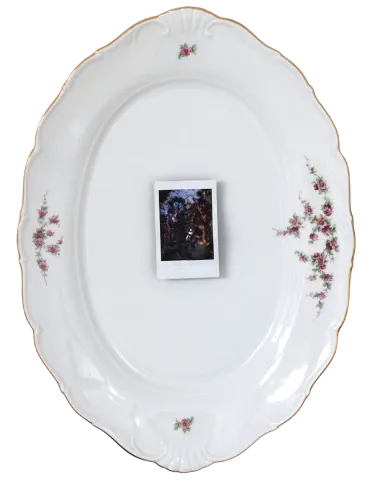
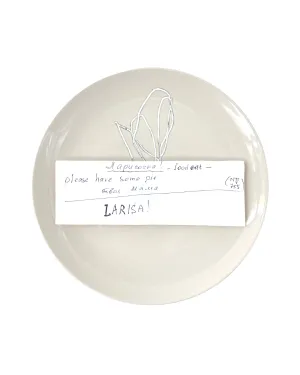
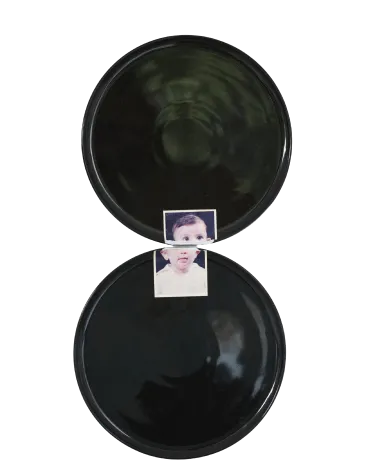
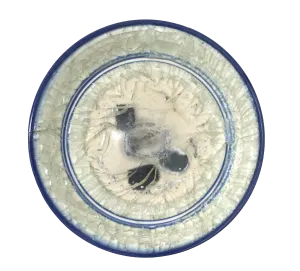
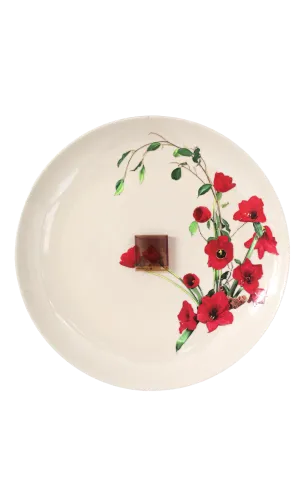
On the one hand, this is an attempt to hold on to memory; on the other, it is a way of rehearsing death and separation in advance, learning to accept the finiteness of everything. So that when it is time to say goodbye for real, you can at least keep the illusion that you were, in some small way, prepared
In the winter of 2025, I saw a large Buddha statue in a second-hand shop and, as it seemed to me at the time, I couldn’t let it go. I came back to it several times and eventually bought it for 30 euros, wiped it clean, and placed it in my studio. About half a year later, I decided to put rice inside it after reading that this is a common custom, and discovered that it was full of husks from grain that had apparently been eaten by insects over time. After I poured the husks out, something inside was still rustling. It was difficult, but I managed to pull out two fragments of a torn photograph of a child. A little later, I found two black plates with small, almost symmetrical chips — and those chips aligned with the tear lines of the photograph.
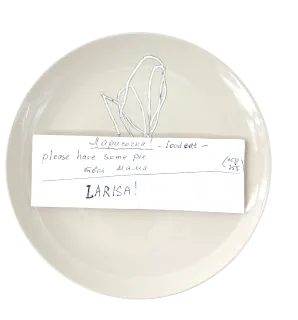
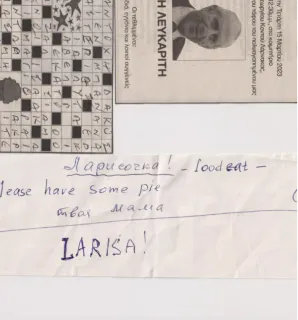
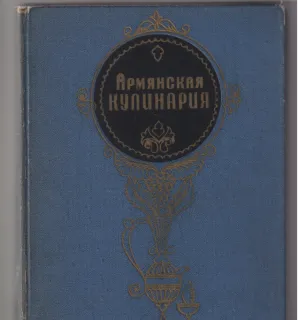
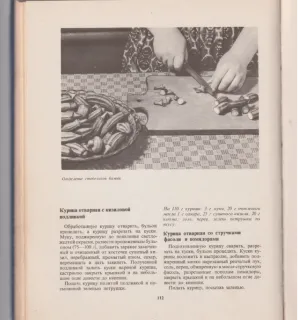
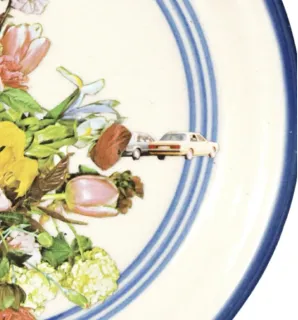
The note on the first plate (slides 1,2) was found inside a recipe book (slide 3,4,5) discovered on the streets of Limassol in 2024. The note is written in two languages. Perhaps the first was the writer’s native one, and the other acquired through migration. How old was the person who wrote it?
In this plate, the ash of burned photographs found in an abandoned house in Limassol in 2025 is sealed inside. The photographs were placed between a plate found in the same house and a sheet of window glass; during firing, the photographs burned away, and the ash was preserved in the space that formed. To say goodbye and not let go.
Plate found in an abandoned home. The photograph was wrapped in a letter written on paper, lying on the floor of that abandoned home. The photo shows a young man; it was torn and taped back together many years ago.
A photograph of palm trees, shot on Polaroid, crumpled and discarded on the pavement near the House of Pilavakis, Limassol, where these very palms still grow. 1919–1934 the house was built by commission of Antonis Pilavakis. The mansion was conceived as a symbol of status and ambition. After his death in 1955, the building gradually fell into decline. Empty halls, closed doors, years of silence. The architecture outlived its owner. In the 1960s the house was transferred to the municipality. A long restoration followed. Since 2018 it has functioned as the Municipal University Library.
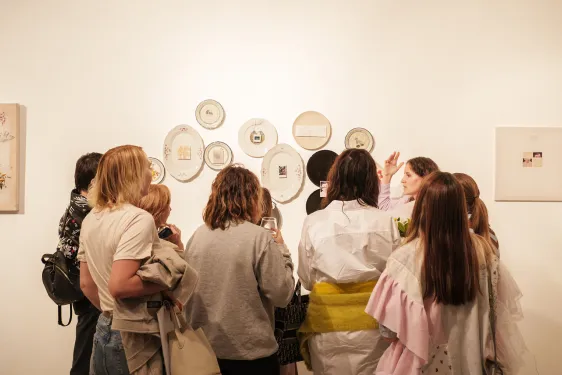
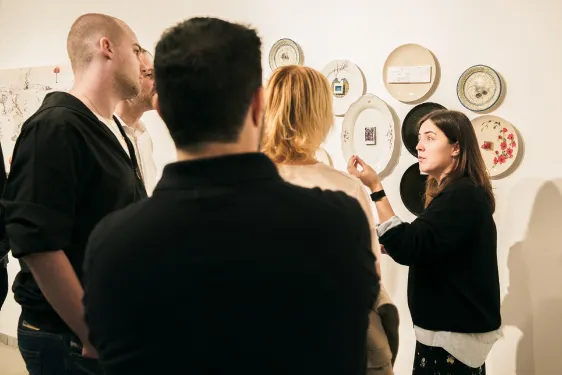
Plates from Abandone Home project was exhibited at Reliquarium solo show in November 2025.
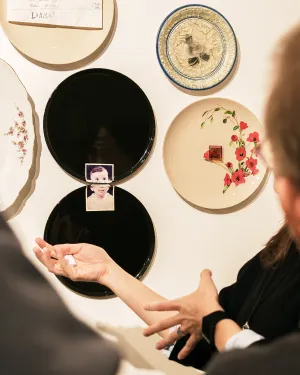
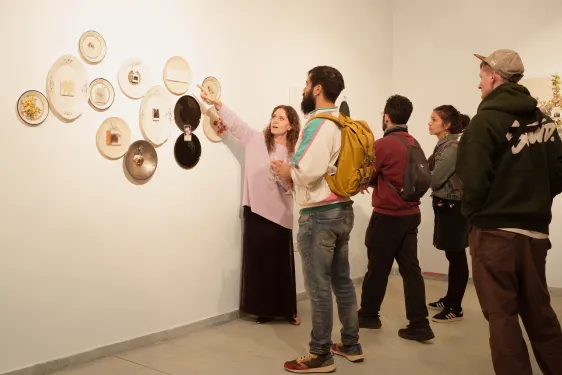
Photos: Aleksander Bgantsev